Stand Out Publishing
|
|
|
About:
Exploring new approaches to machine hosted neural-network simulation, and the science behind them.
Your moderator:
John Repici
A programmer who is obsessed with giving experimenters a better environment for developing biologically-guided neural network designs. Author of an introductory book on the subject titled: "Netlab Loligo: New Approaches to Neural Network Simulation". BOOK REVIEWERS ARE NEEDED! Can you help?
Other Blogs/Sites:
Neural Networks Hardware (Robotics, etc.) 
|
This entry will also serve as a place to accumulate links to resources and information on the subject of neural networks and their history at this layman's level. . . . . . . . Contents
[Read more...] Saturday, September 24. 2011UC Berkeley - Scientists use brain imaging to reveal the movies in our mind
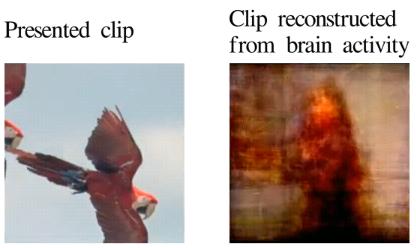
Scientists at UC Berkeley have taken brain scans of subjects in an fMRI machine while they watched a movie clip. They then reconstructed the movie the subjects were watching using only the brain scan data, and a database of 18 million seconds of random video gleaned from the web.
The amount of new understanding this could allow us to gather about mind-brain correlates and first person knowledge should be considerable. If this lives up to the hype, a lot of new research ideas should come out of it. Keeping fingers crossed here. In the above clip - the movie that each subject viewed while in the fMRI is shown in the upper left position. Reconstructions for three subjects are shown in the three rows at bottom. All these reconstructions were obtained using only each subject's brain activity and a library of 18 million seconds of random YouTube video that did not include the movies used as stimuli. The reconstruction at far left is the Average High Posterior (AHP). The reconstruction in the second column is the Maximum a Posteriori (MAP). The other columns represent less likely reconstructions. The AHP is obtained by simply averaging over the 100 most likely movies in the reconstruction library. These reconstructions show that the process is very consistent, though the quality of the reconstructions does depend somewhat on the quality of brain activity data recorded from each subject. [source: Gallant Lab (see resources below)] [Read more...] Friday, September 23. 2011
in: Announcements, Pub notes
Pub Notes - Fifth Printing - Corrections. . .
It's called the fifth printing, but that is a bit of a misnomer. These days the actual physical printings are done in small runs in multiples of six. It is really more like the fifth “edit.”
In practice, corrections have been made to each new edit while its previous edit was running. After five edits, there have been hundreds of corrections. The issues addressed have included a lot of out-of-place commas, over-used hyphens, typos, and more grammar errors than I'd like to admit. How do you know you've got the fifth (or better) printing?  Easy. Look at the bar code on the back cover. If the price code (the smaller bar-code, to the right of the ISBN number) says “90000” (no price specified), you have an older copy. If it reads “54795” (USD $47.95) you have the fifth or better edit. [Read more...] Wednesday, September 7. 2011
in: Science & Tech
True Random Number Generator Using Only Logic Gates?Thursday, August 11. 2011
in: Robotics, Science & Tech
Robot Arm Inventor Dies
George Charles Devol
Inventor of Robot Arm 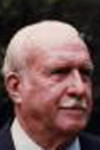 20 February 1912 — 11 August 2011 The self taught inventor of the robotic arm, which has become an icon of factory automation from Detroit to Asia, has died. Story: Pioneer of the long arm of factory floor technology Wednesday, May 18. 2011
in: Science & Tech
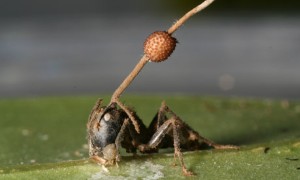
Four New Species of Zombifying Ant Fungus Found
[. . .article] The paper: Hidden Diversity Behind the Zombie-Ant Fungus Ophiocordyceps unilateralis: Four New Species Described from Carpenter Ants in Minas Gerais, Brazil Background & Further Reading. A few interesting links to related stuff. Includes some strange and interesting background about ants.
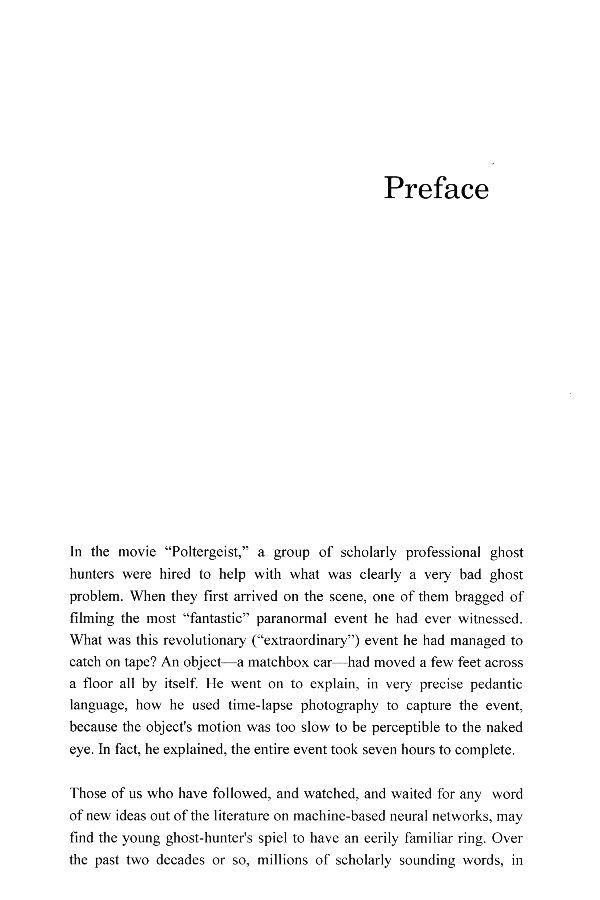
Tuesday, May 10. 2011Book Excerpt Pages Now Include the Preface
|
Calendar
QuicksearchtagsCategoriesFeedsBlog AdministrationPowered by | |||||||||||||||||||||||||||||||||||||||||||||||||||||||||||||||||||||||||||||||||||||||||||||
Exploring new approaches to
machine hosted neural-networks,
and the science behind them.